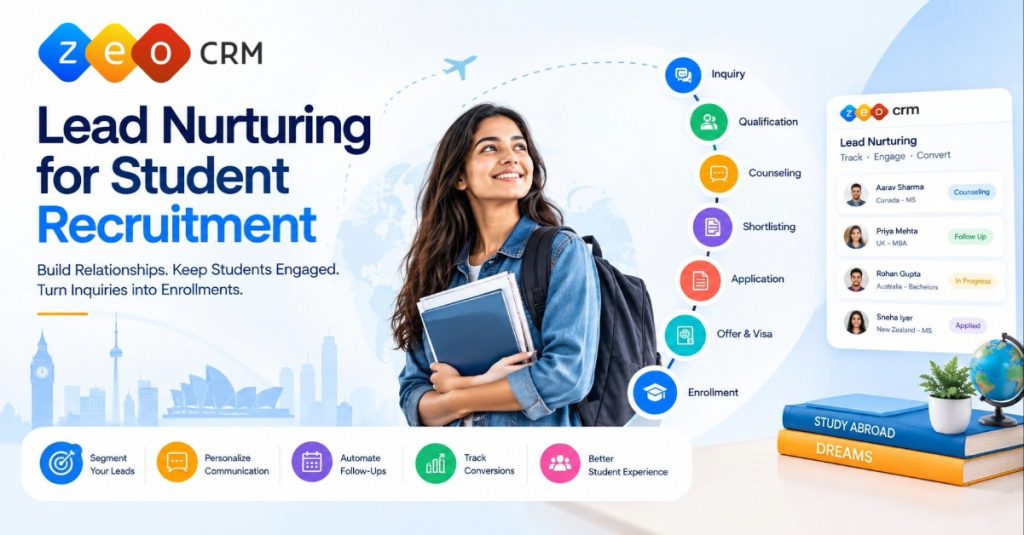
Student lead nurturing is the process of staying in consistent, relevant contact with a prospective student from their first inquiry until they are ready to apply and enroll. It involves regular follow-ups, personalized communication based on the student’s destination and course interest, and timely re-engagement when a lead goes quiet, so fewer students are lost simply because nobody kept in touch.
Most student inquiries do not convert on the first call. A student might reach out about studying in Canada, go quiet for three weeks while they think it over, then come back ready to move forward, if someone actually stayed in touch during that gap. Lead nurturing is what fills that gap.
At ZeoCRM we see consultancies lose genuinely interested students all the time, not because the counseling was bad, but because nobody followed up consistently enough to stay top of mind. This guide covers what student lead nurturing actually looks like, the strategies that work, and how a CRM can make the whole process a lot less dependent on memory.
Student lead nurturing is the ongoing process of building a relationship with a prospective student through relevant communication, useful information and consistent follow-up, from their first inquiry until they are ready to apply.
This is different from a single follow-up call. Lead nurturing in education is a sustained effort, since most students take weeks or months to decide on a destination, course and timeline, and they need touchpoints along the way that actually match where they are in that decision. Student recruitment lead nurturing done well feels less like being chased and more like being genuinely supported through a long, sometimes confusing process.
Student recruitment is a long game. A student rarely decides on a country, university and course in one conversation, and the consultancies that stay engaged throughout that decision window are the ones who end up with the enrollment when the student is finally ready.
Education lead nurturing matters because most inquiries are not lost due to a bad first impression. They are lost to silence. A student who does not hear from anyone for a month naturally starts looking elsewhere, even if their first conversation went well.
The lead nurturing benefits tend to show up in a few consistent ways: higher counseling conversion since students remember who actually stayed in touch, fewer leads going completely cold, better use of counselor time since nurturing can be partly automated, and a stronger student experience overall, since consistent communication builds trust during what is often a stressful decision.
Nurturing looks different at each stage of a student’s journey, and matching your communication to the right stage matters more than the volume of messages you send.
New Inquiry:
The first days matter most here. A quick, warm response that acknowledges the inquiry and sets expectations for next steps does more to build trust than any amount of follow-up later can undo.
Lead Qualification:
Once basic details are gathered, communication should start narrowing toward the student’s actual situation, destination interest, academic background and timeline, rather than staying generic.
Counseling:
This is where nurturing becomes most personal, with communication built around the student’s specific goals, preferred countries and course options, ideally reinforced with helpful information between actual counseling sessions.
University and Course Shortlisting:
As options narrow, nurturing shifts toward sharing relevant details about the shortlisted universities and courses, keeping the student engaged with concrete choices rather than abstract possibilities.
Application:
Nurturing here looks more practical: reminders about documents, deadlines and next steps, since momentum can stall easily if a student feels lost in the paperwork.
Offer and Visa Stage:
Communication should stay steady through this stage, since the wait for an offer or visa decision is often the most anxious part of the journey for a student and their family.
Enrollment:
Even after enrollment, a bit of continued contact around pre-departure details and settling in helps close the loop well and can lead to referrals down the line.
Grouping students by their country and course interest lets you send communication that actually feels relevant, rather than generic updates that could apply to anyone.
A message referencing a student’s specific goals, previous conversation or shortlisted universities lands very differently than a copy-paste template, even when the underlying content is similar.
Email, WhatsApp and phone calls each suit different moments. A quick WhatsApp nudge might work better for a deadline reminder, while a call suits a more substantial counseling update.
Information about visa processes, scholarship opportunities or what life is actually like in a particular city keeps a student engaged even when they are not ready to move forward yet.
A defined rhythm, whether that is every few days early on or less frequently as the relationship matures, keeps leads warm without tipping into being annoying.
Intake deadlines, application windows and scholarship cutoffs are natural moments to reach out with a relevant nudge rather than a generic check-in.
A student’s country or course preference should route their nurturing communication to a counselor who actually knows that destination well, not whoever happens to be free.
Watching which messages actually get opened, clicked or replied to tells you what is working and what to change, rather than running the same nurturing sequence forever on autopilot.
CRM lead nurturing takes the manual guesswork out of staying in touch. Instead of a counselor trying to remember who needs a follow-up today, the system tracks it automatically and prompts the right action at the right time.
Automated lead nurturing through an education CRM typically includes scheduled follow-up reminders, templated but personalized messaging, automatic segmentation by destination or course, and a full communication history so any counselor can pick up a conversation with proper context. A student recruitment CRM connects this nurturing directly to the pipeline, so a lead moving from counseling to shortlisting automatically shifts into the next stage’s communication pattern rather than staying stuck on outdated messaging.
None of this replaces the human side of counseling. It just makes sure nothing falls through the cracks while a counselor focuses on the conversations that actually need a person.
Cold lead nurturing is worth taking seriously, since a lead that has gone quiet is not necessarily a lost one. Life gets busy, priorities shift, and a student who stopped responding three months ago might just need a reason to pick the conversation back up.
Student lead reactivation tends to work best with a fresh angle rather than a repeat of the same old message. A new intake opening up, a scholarship deadline, or simply checking in with something genuinely useful can restart the conversation. Lead re-engagement campaigns that segment cold leads by how long they have been inactive, and by their original destination interest, tend to perform better than a single generic “just checking in” blast sent to everyone at once.
Nurturing efforts are only useful if you can tell whether they are actually working, and a few core lead nurturing KPIs make that visible.
| Metric | What It Shows |
|---|---|
| Response rate to nurturing messages | Whether your outreach is actually landing |
| Time to re-engagement | How quickly a cold lead responds once contacted again |
| Counseling conversion rate | Movement from inquiry to an actual counseling session |
| Application conversion rate | Movement from counseling to a submitted application |
| Nurturing to enrollment rate | The full journey from ongoing nurturing to a final enrollment |
| Cold lead reactivation rate | How many previously inactive leads come back into the pipeline |
These student recruitment metrics and broader lead nurturing metrics work best when reviewed regularly rather than checked once and forgotten, since patterns in what works tend to shift as intakes and destinations change throughout the year.
Lead nurturing is really just consistent, relevant follow-up done well over the length of a student’s decision journey. Most lost students were not lost to a bad conversation. They were lost to silence somewhere between the first inquiry and the moment they were finally ready to move forward.
At ZeoCRM we built our platform to make that consistency easier, connecting segmentation, automated follow-ups and full communication history directly into your recruitment pipeline so nurturing does not depend entirely on any one counselor’s memory. If your team is losing good leads simply because nobody stayed in touch, it might be worth seeing how a proper nurturing workflow could change that.
What is lead nurturing in student recruitment?
It is the ongoing process of staying in relevant contact with a prospective student from their first inquiry through enrollment, rather than a single follow-up.
Why does lead nurturing matter for education consultancies?
Because most students take weeks or months to decide, and consultancies that stay engaged throughout that period are the ones who end up with the enrollment.
What are some effective lead nurturing strategies?
Segmenting leads by destination, personalizing follow-ups, using multiple communication channels, and timing outreach around key deadlines all tend to work well.
Can a CRM automate student lead nurturing?
Yes, a CRM can schedule follow-ups, personalize messaging by segment, and track communication history so nurturing continues consistently across the team.
How do you re-engage a cold student lead?
A fresh angle, such as a new intake opening or a relevant update, tends to work better than repeating the same generic check-in message.
What metrics should be tracked for lead nurturing?
Response rate, time to re-engagement, counseling and application conversion rates, and cold lead reactivation rate are all worth monitoring regularly.
